
Excellent traders and lovers of Brazilian soccer
The western part of Istanbul seems to live in two worlds at the same time. In addition to its ancient historical aspects, the city not only preserves its culture for the local environment, but also promotes it abroad. As professor Eugênio Trivinho, a researcher at the Stricto-Sensu program in Communication and Semiotics at the Pontifical Catholic University of São Paulo (PUC-SP), rightly observes, cities with expressive and profound local characteristics can also be inserted into the global context, becoming glocal societies. In other words, they interact with other cities and countries without losing local ties.
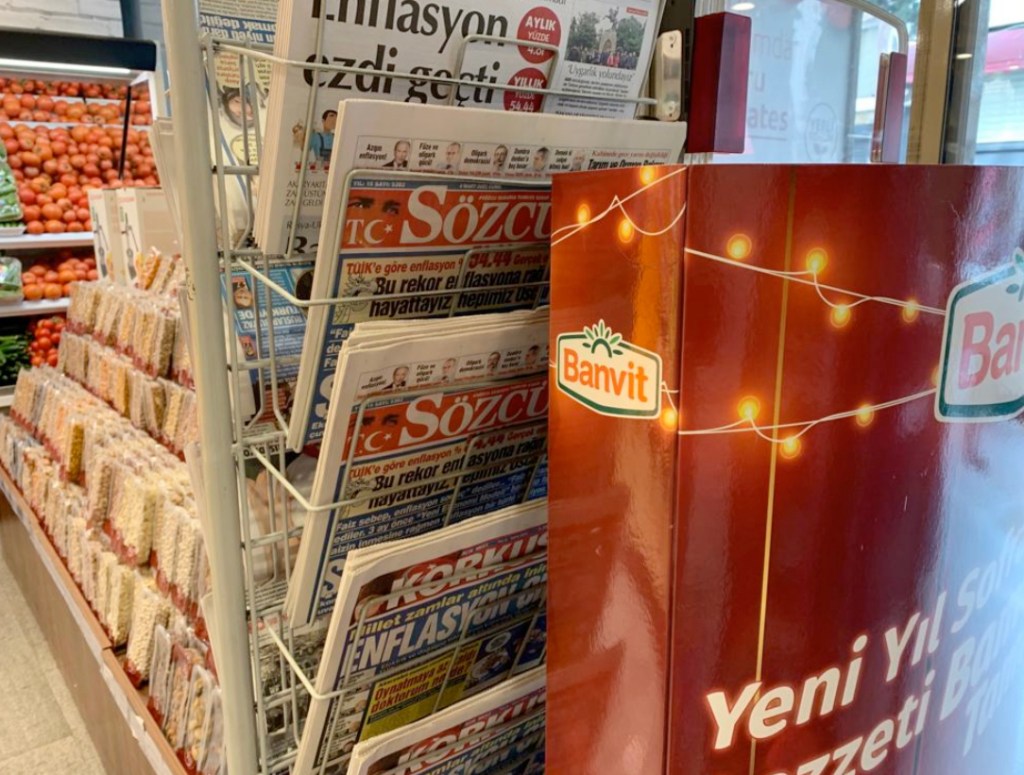
As a first perception of glocalism, we noticed terms and expressions in the headlines printed in the newspapers displayed on a display at Carrefour, a French food retailer located on Siraselviler Avenue, which connects Taksim Square to the lower part of the Besyktas neighborhood, on the shores of the Bosphorus Strait. “Inflation” and “Russian invasion of Ukraine” stood out. One exclusively Turkish theme and another from the international sphere. It was not difficult to discover the subject of discussion in Turkey, as the Turkish word “enflasyon” resembles the Portuguese “inflação” and the English “inflation”. In economic terms, the worsening Turkish financial crisis also reveals a cross-border component. It can be understood that in many cases the economic difficulties of a nation are projected both from the local to the global, and from the global to the local.
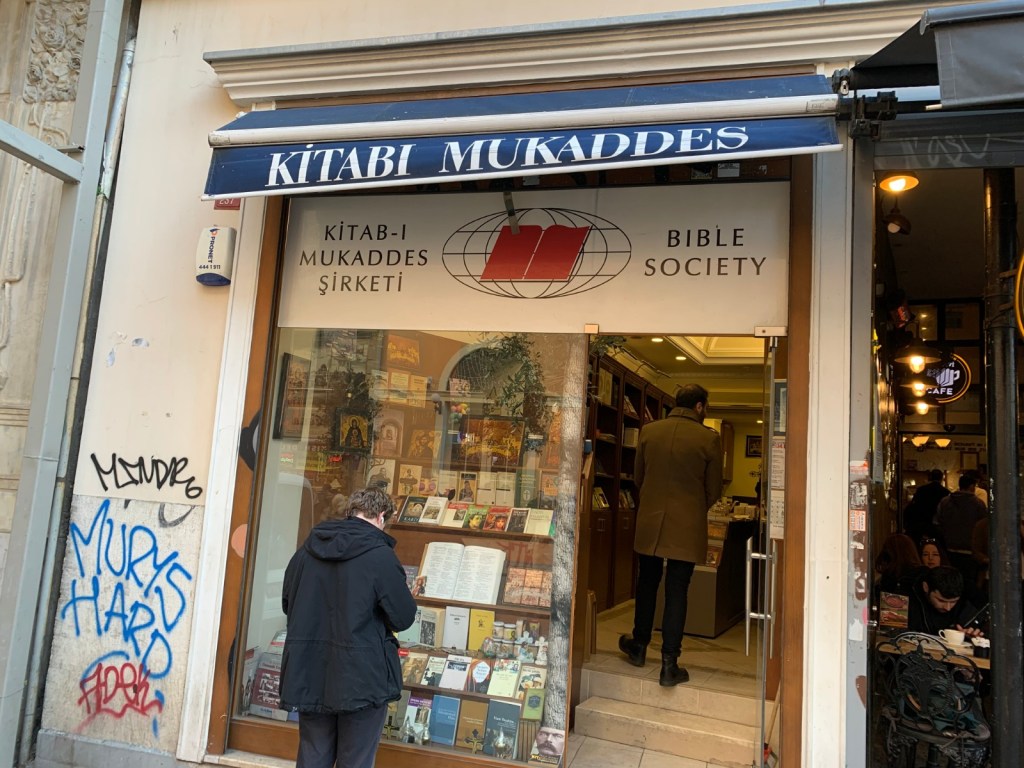
Bookstores spread throughout the city demonstrate the level of intellectuality of a people and their interest in literary works, whether as writers or readers. Turkey is not a reference for authors, but the number of titles shows the spread of literary art in Turkish society, as well as the interest of readers, given that the stores are never without customers.
Migration
Known in Brazil, the term “Turkish” originates from the migratory process, but not from citizens of Turkey, as explained in Attacks and Responses (2018, p. 51):
“Most of the Arab immigrants who came to Brazil from the end of the 19th century onwards arrived from the region previously dominated by the Turkish-Ottoman empire, shared shortly afterwards by British and French colonizers. Among these, the Lebanese, Syrians, Arabs, Saudis, Iraqis, Jordanians, Egyptians and Palestinians stand out. In Brazil, the first activity that characterized them was that of peddlers, street vendors of any type of manufactured objects, fabrics, shoes, trinkets. In short, you just had to order something to become a customer of the Turkish. And they did not restrict activities to one region of the country. His wanderings covered the territory in all possible latitudes and longitudes. Little by little, the most persevering and talented began to settle in cities, opening wholesale establishments and stores, where they sold everything. They were the bazaars. At first, the Arabs did not mix with the population. They sought to preserve their traditions and marriages took place internally, among the so-called patricians. Brazilians harassed them with derogatory and prejudiced jokes. Being Turkish meant stinginess, greed, isolation, despite profitable business relationships with clientele. This distancing of the Brazilian is explained by the need to preserve identity, to resist the culture of the new country. Immigrants chose Argentina, Colombia, Venezuela, Canada, the United States and, mainly, Brazil to put down roots. The initial waves headed to North America, but prejudice, difficulties in adapting and the need for self-preservation in isolated strongholds led to a change of route to South America, where they adapted without much interference.”
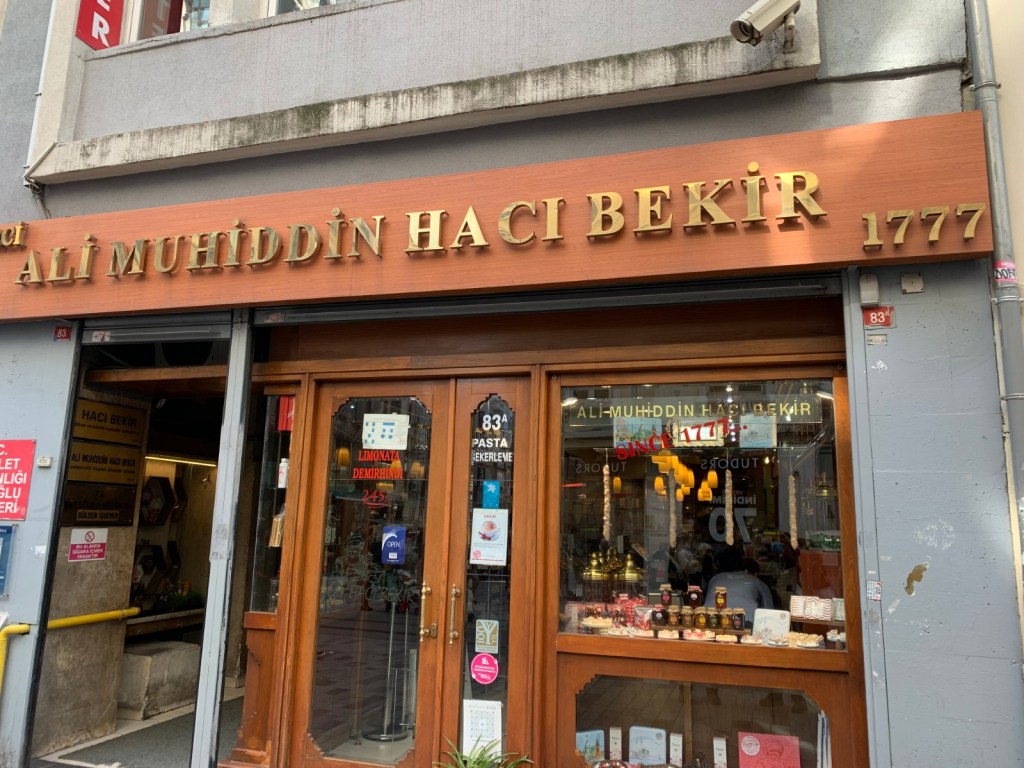
Around a thousand Turks live in Brazil, many of them with refugee claims. Over the last century, most of them migrated with Turkish passports, coming from other regions of the Turkish-Ottoman Empire. The stereotype of skilled traders is visibly projected both on Istanbul’s main streets and avenues and in the alleys that wind through the city’s older parts. The tricks to win over customers are very varied. Using a date next to the establishment’s trade name sells solidity, experience, trust, credibility. Dates from 1962, 1898, 1864, and even 1777, seek to retain customers, the external actors of the commercial establishment.
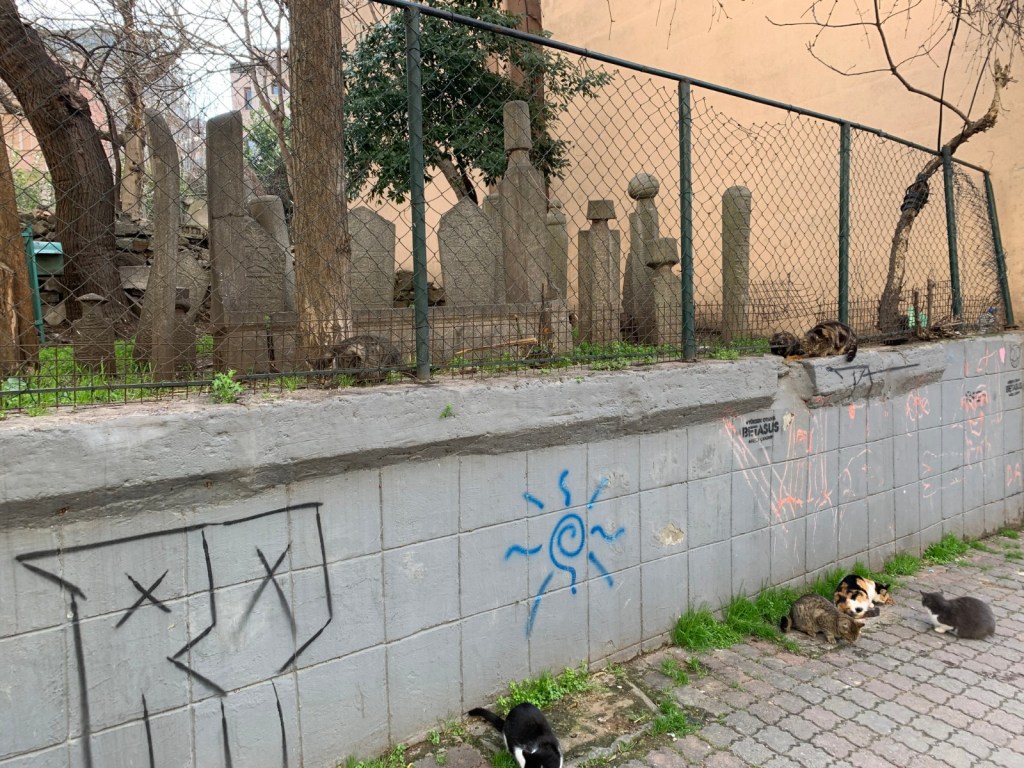
Traditions surpass any reasonableness, as is the case with the small cemetery found between two buildings. The only living beings circulating among the tombs were cats, also present along the slope. Either they like the presence of the cat, or there are too many rats in the city, and raising cats is necessary in order to combat rodents and eliminate possible transmission of diseases resulting from the proliferation of rats. In front of each business or building, you can see a little house and food for the felines.
Junction of the world
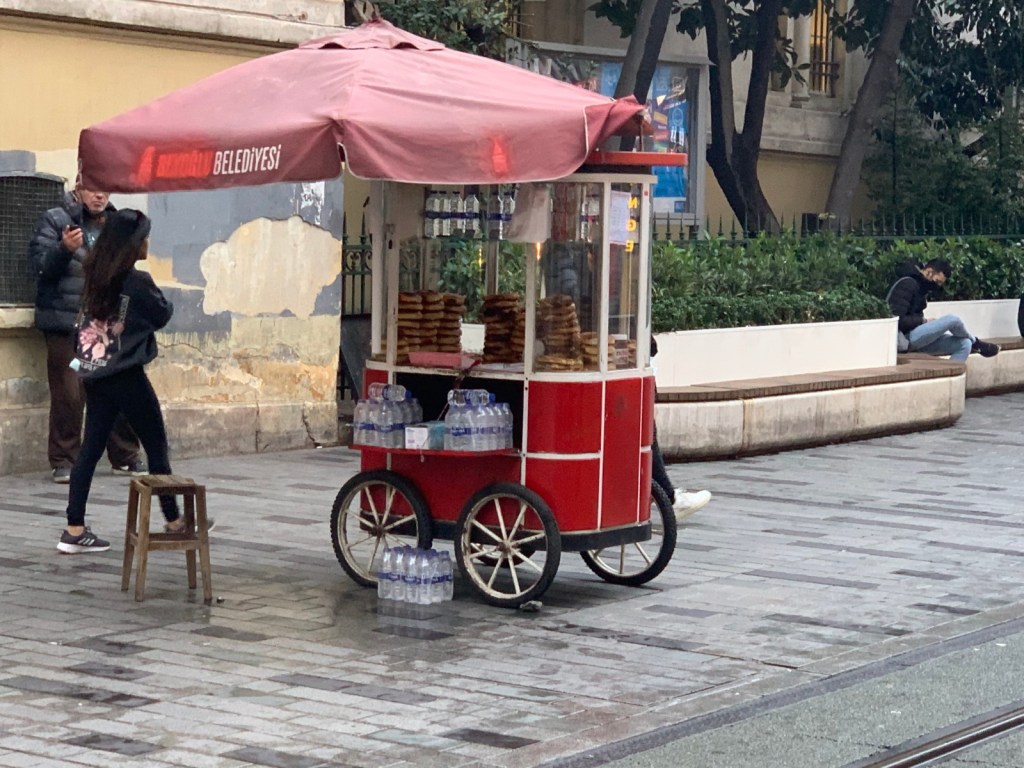
To attract the attention of potential customers and direct them to the streets perpendicular to the main streets, face-to-face persuasion techniques are used, with flyers, folders and arguments in favor of the products, prices, location, whether it is a clothing store, a store with various items, or even a restaurant. Another method of reaching specific customers was found in a grocery store that sold fruit and vegetables during the day and turned into a bar at night. A guy on the street had a bathroom scale that would weigh anyone who paid the required price.
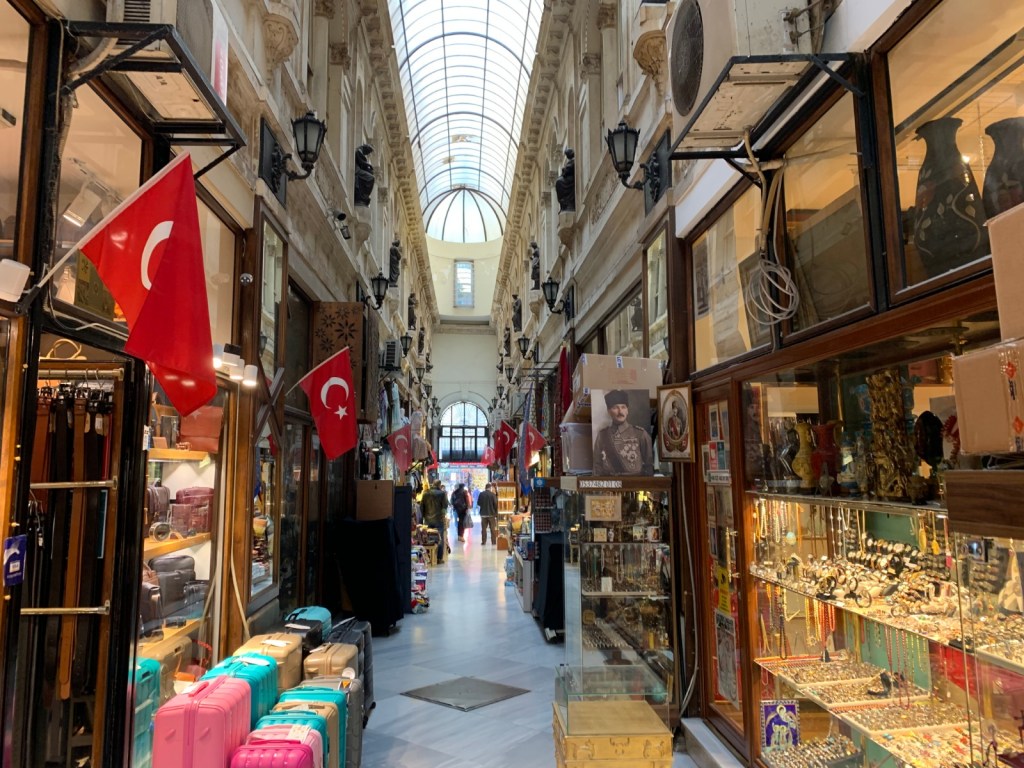
Much more than in other countries, patriotism and national pride emerge through the presence of the Turkish flag in almost all public and private establishments, houses, balconies, counters, uniforms and vehicles. In a gallery – similar to the old souks – or bazaar, all the shops displayed the red flag with the white star and crescent moon. The number of souvenir shops also promotes the country, from keychains, cards and fridge magnets to more sophisticated souvenirs. Local images conquer intercontinental space.
The noise of horns denotes a community in a hurry. According to Trivinho, big cities experience the speed syndrome, dromocracy, and society in the age of speed. Stopping in traffic or even being in motion does not prevent anyone from being honked at. The hustle and bustle of motorcycles, mopeds, cars and trucks mixes with the unintelligible Turkish language, the discernible Arabic, the detectable broken English and dozens of other languages and dialects. This characteristic shows how diverse Istanbul has become, becoming the largest crossroads on the planet, between North and South, West and East. Add here the “multicolored” ethnic variants. In a shopping mall we met a German, we could tell by his accent. In another, the merchant served us in Italian, switching to Spanish and an attempt at English.
Health issue
Unfortunately, the addiction to smoking has made the Turk a slave to the tobacco industry. It is common to see 10-year-old boys with cigarettes in their mouths or between their fingers. If there is no policy to address this problem, it will worsen and take a heavy toll on public health resources, social security and families who will lose parents, children, grandparents, cousins, uncles and friends.
When looking at the crowd, one notices the predominance of dark tones in clothing, from gray, blue to black, a fact also present in Ukraine, very different from colorful Latin America. These nuances and perceptions show how much Turkish society wants to preserve historical memory, values, beliefs.




National passion
After leaving Ukraine, we arrived in Istanbul with no guarantee of returning to Eastern Europe. Many believe that Istanbul is the Turkish capital. It is the largest city. In contrast, 450 kilometers to the southeast, Ankara boasts the seat of government.
We took the opportunity to do some shopping at a small supermarket. While looking for a product in the refrigerator, my wife asked the owner, who was at the checkout, about another product. When he found out we were Brazilian, he started chattering about football and the Brazilian players who played for the team he supported, Galatasaray. We informed him that a fellow countryman, Alex, played for Fenerbahçe and even had a statue in his honor, but he changed the subject and agreed with the former player’s abilities, despite having played for their biggest rival. “A good player, but a bad team,” he grumbled.
We returned to the hotel and planned a gift for Mr. Ramazan. I had an official Brazilian national team shirt in my luggage, barely used. We find some suitable paper, perfume the shirt, wrap it and head off to deliver the gift. When he opened the package, he didn’t know what to do, he was so happy and excited. We also get so excited that we forget to get the contact, name, cell phone number.
The next day, we went to the establishment, but we couldn’t find it. We asked the person in charge on duty, but he answered in Turkish. So, we went to the place several times and didn’t find our new Turkish friend again.
Days later, when we met Brazilian Daniel de Oliveira, who was living in Bursa at the time, on the other side of the Sea of Marmara, we shared the experience. He volunteered to visit the grocery store. So, we went and, when we approached the gentleman who only spoke Turkish, Daniel learned that the recipient always worked from 11 p.m. onwards. When we contacted him two weeks earlier, he had switched shifts with the other partner, and we were able to meet him and give him the shirt.
The partner told us that Ramazan wore the Brazilian national team shirt and went to the Galatasaray stadium. Amidst the soccer fans, he shouted, pointing to his new shirt: “I have a Brazilian friend. He gave me this shirt as a gift. You don’t have one.” In certain Eastern societies, having a foreign acquaintance or friend improves one’s image and importance among family, colleagues and neighbors.
On a Friday night, with snow on the streets and temperatures almost below zero, we returned to the supermarket to see the owner of the establishment again. There was Ramazan, smiling when he saw us. He came out from behind the counter and came to hug me. We talked a little and finally got his contact information. After the transfer to Istanbul, we gave Daniel the responsibility of continuing the friendship with the owner of the grocery store.
Lia Mara de Souza Holdorf, librarian, master in Arts.
Ruben Dargã Holdorf, Comm.Se.D

 The Social Crafter
Leave a comment